Mt Fuji 5th Station Hot Spring Tour: Above the Clouds, Then Into the Onsen
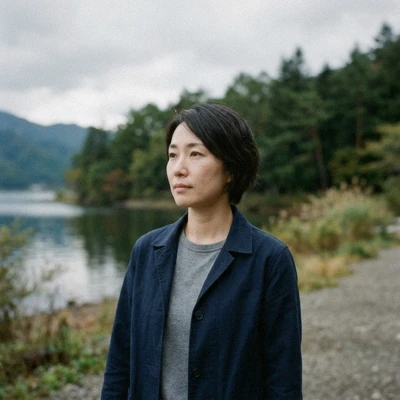
This is the one Fuji day trip that climbs the mountain by road and then rewards you for it. A coach winds up the Subaru Line to the 5th Station at 2,300 metres — often above the cloud line — before dropping back to soak in a hot-spring onsen and stroll the spring-fed ponds of Oshino Hakkai. At $60 for a full ten hours it sits in the middle of the pack on price, but it's the only route that pairs high altitude with a bath. One honest caveat up front: the 5th Station access road shuts for winter and during storms, and operators swap in a lower viewpoint when it does. For the full picture, see how the other Mount Fuji day trips compare.
About the 5th Station & Onsen Tour
Cancel up to 24 hours ahead for a full refund
Coach up and back, about two hours each way
A full day, morning departure to early evening
Reached by road on the Subaru Line, weather permitting
A soak with Mount Fuji as the backdrop, weather clear
Eight clear spring ponds fed by Fuji snowmelt
Check Live Availability & Prices
Real-time dates and prices for the 5th Station, onsen and Oshino Hakkai day trip — with free cancellation up to 24 hours before.
Why Climb to the 5th Station First
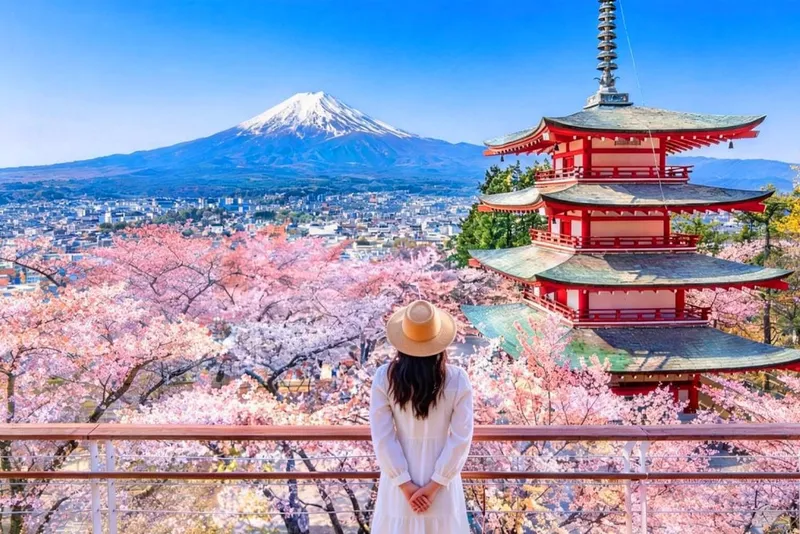
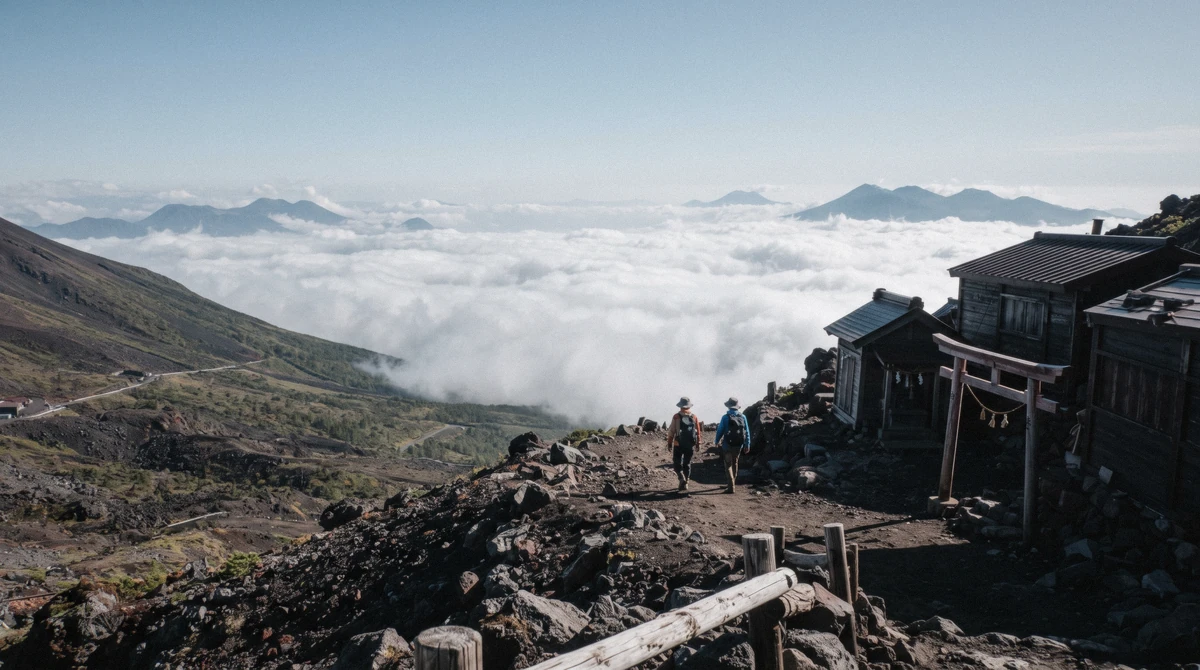
Most Fuji day trips keep you at lake level, looking up at the mountain. This one drives you onto it. The Subaru Line toll road corkscrews up the northern flank to the 5th Station at 2,300 metres, a broad terrace of shops, shrines and viewing platforms that marks where the Yoshida climbing trail begins. On a clear day you stand level with, or above, the clouds — a completely different vantage than the postcard shots from Oishi Park or the Chureito Pagoda.
The altitude is real. Temperatures at the 5th Station run roughly 12°C cooler than Tokyo, so even in midsummer it hovers around 10–15°C up top. That is the whole point: you get the thin, bright mountain air, then you come back down and warm up in a hot spring.
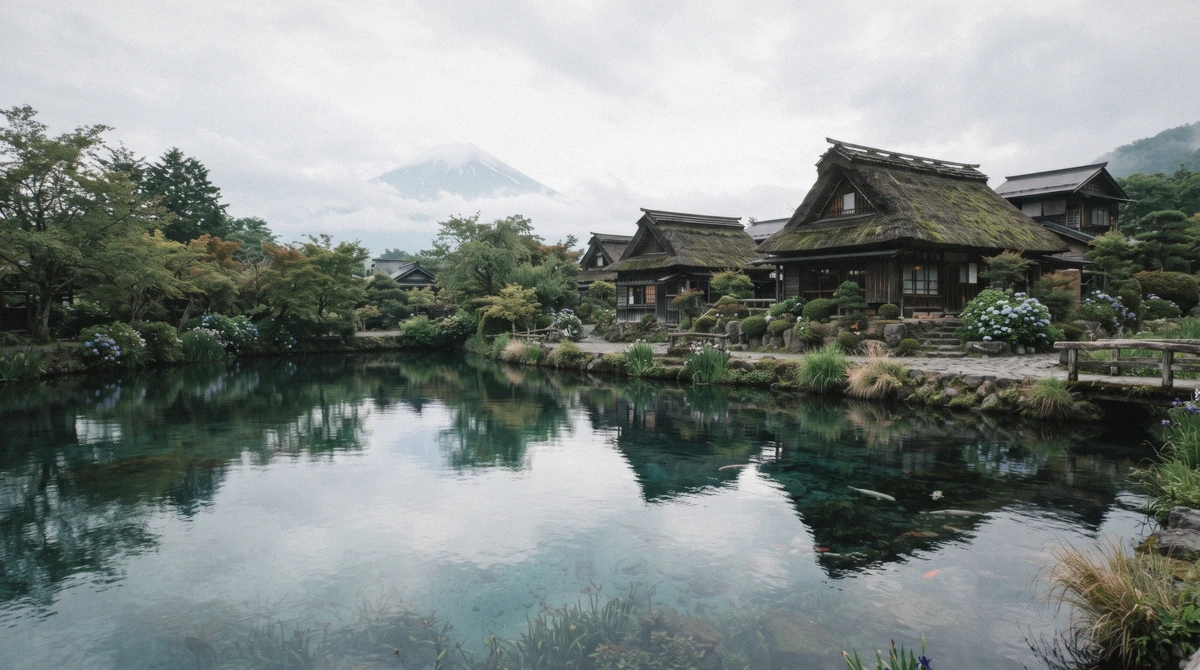
The second half of the day is deliberately slower. After the 5th Station the coach descends to a hot-spring onsen for a soak, then to Oshino Hakkai — a cluster of eight ponds fed by Fuji snowmelt filtered through the mountain for decades, so clear you can count the coins on the bottom. It's a well-judged arc: exertion and altitude, then heat and stillness.
At $60 for the day it costs less than most lake-and-pagoda tours while giving you the one thing they can't — the mountain underfoot.
What You'll See
A full day that climbs high, then unwinds low:
- The Subaru Line 5th Station at 2,300 metres, gateway to the Yoshida climbing trail
- Above-the-clouds views of Mount Fuji's summit and the Fujigoko basin below
- Komitake Shrine and the row of mountain teahouses and gift halls at the station
- A hot-spring onsen soak, with Fuji framed from the baths on a clear afternoon
- Oshino Hakkai — eight spring-fed ponds and thatched farmhouses
- Fuji reflected in the ponds, with grilled snacks and spring water to taste
What's Included (and What Isn't)
What's Included
- Round-trip coach transport from central Tokyo
- English-speaking guide for the full day
- The drive up the Subaru Line to the 5th Station, when the road is open
- Onsen hot-spring entry — most operators include the bathing fee, but confirm on your booking page before you go
- A stop at Oshino Hakkai spring village
Not Included
- Lunch and drinks unless the tour notes otherwise — often free time at the station or village
- A bath towel at the onsen; some baths rent or sell one, but bringing a small towel is safer
- Personal spending at the 5th Station shops and Oshino Hakkai stalls — bring cash
- Hotel pickup — most tours meet at a set point near a major Tokyo station
How the Day Flows
-
08:00
Depart central Tokyo
Meet near a major station — usually Shinjuku — and board the coach. Check the exact meeting point and time on your booking page the night before.
-
10:00
Climb the Subaru Line
The road switchbacks up Fuji's northern flank. Ears pop, the forest thins, and the temperature drops as you approach the tree line.
-
10:30
5th Station at 2,300m
Around an hour on the terrace: viewing platforms, Komitake Shrine, teahouses and the trailhead marker. Time enough to acclimatise and warm up with a drink.
-
12:30
Onsen hot-spring soak
Back down to a lower elevation for a bath. On a clear afternoon the outdoor pools look straight at Mount Fuji. Wash first, then soak.
-
14:30
Oshino Hakkai
The eight spring ponds and thatched houses, with time to taste the spring water, try grilled snacks and photograph Fuji mirrored in the water.
-
16:00
Return to Tokyo
Board for the drive back, arriving in the city in the early evening, traffic depending.
Important Things to Know Before You Go
The details that decide how this day goes:
- The 5th Station road closes for winter — roughly mid-November to mid-April — and during storms and heavy snow at any time of year. When it's shut, operators swap in a lake-level viewpoint. If the 5th Station is your reason for booking, confirm the stop is guaranteed for your date before you pay.
- It's cold at altitude even in summer: the 5th Station sits around 10–15°C when Tokyo is sweltering, and the wind bites. Bring a jacket regardless of the forecast down in the city.
- The bus climbs from sea level to 2,300 metres fast. Some people feel mild altitude effects — a light headache or breathlessness. Move slowly at the top and it usually passes.
- The Subaru Line switchbacks are relentless; if you're prone to motion sickness, take something before you leave and sit near the front.
- Onsen are traditionally enjoyed nude, with a small towel kept out of the water. Wash thoroughly at the shower stations before you get in.
What to pack
- A warm, windproof jacket — the single most-forgotten item on this tour
- A small towel for the onsen, plus a hair tie if your hair is long
- Cash for lunch, the station shops and Oshino Hakkai stalls
- Comfortable shoes for uneven ground at the station and the ponds
- Sunglasses and sunscreen; the light is fierce above the clouds
- Motion-sickness tablets if the mountain road worries you
Insider Tips for the 5th Station & Onsen Day
Small moves that make the difference between a good day and a great one:
- Dress in layers you can peel: you'll go from a cold, windy 2,300-metre terrace to a hot spring to a mild valley village in the same afternoon.
- Give yourself the first 20–30 minutes at the top to just breathe and walk slowly before climbing any steps — it heads off the altitude headache.
- Book a date in the shoulder months (late spring or early autumn) for the best odds of both an open road and a clear summit; summer haze often hides the peak.
- If you have tattoos, check the onsen's policy when you book — many rural baths still refuse ink, and a skin-coloured cover seal or a private (kashikiri) bath is the workaround.
- Leave your phone in the changing-room locker at the onsen; cameras aren't welcome in the bathing area, and it's better to just soak.
- Mornings give the sharpest mountain views — cloud tends to build around the summit by midday, so a tour that reaches the 5th Station before noon is worth choosing.
Where You're Headed
Who Is This Tour Best For?
The right fit for this high-then-low day:
- Travellers who want to stand on the mountain, not just photograph it from the lakes
- Anyone who likes the idea of an onsen soak built into a sightseeing day
- Warm-season visitors (late spring to autumn), when the 5th Station road is reliably open
- First-timers happy to trade a few extra viewpoints for one big elevation payoff
- Photographers chasing above-the-clouds shots and Fuji mirrored in the Oshino ponds
Not ideal for
- Winter visitors set on the 5th Station — the road is usually closed from mid-November to mid-April
- Anyone strongly affected by altitude, who may find the fast climb to 2,300 metres uncomfortable
- Travellers uneasy about communal nude bathing, unless the onsen offers private baths
- Photographers wanting the Chureito Pagoda — that classic view isn't on this route
5th Station & Onsen Tour — FAQ
Is the Mount Fuji 5th Station open when I travel?
The Subaru Line to the 5th Station is open from roughly mid-April to mid-November, and closed through winter when snow and ice shut the road. It can also close briefly in storms at any time of year. Because of this, tours that list the 5th Station will substitute a lake-level viewpoint when the road is shut — so if the station is your main reason for booking, confirm it's guaranteed for your date.
How high is the 5th Station and will I feel the altitude?
The Subaru Line 5th Station sits at 2,300 metres. Because the coach climbs from near sea level in about two hours, some people feel mild altitude effects — a light headache, dizziness or breathlessness. Moving slowly for the first half hour usually settles it. Anyone with heart or breathing concerns should take it easy up top.
Is onsen entry included in the tour?
On most versions of this tour the hot-spring bathing fee is included, but it varies by operator, so check the inclusions on your booking page. A bath towel is usually not provided — bring a small towel or plan to rent one at the onsen.
Can I use the onsen if I have tattoos?
It depends on the specific onsen. Many Japanese hot springs still turn away visible tattoos, while others allow them if you cover small ink with a skin-coloured seal, and some are fully tattoo-friendly. If you have tattoos, ask the operator which onsen the tour uses and what its policy is before you book; a private bath is the reliable workaround.
How cold is it at the 5th Station?
Much colder than Tokyo. The temperature drops about 0.6°C for every 100 metres of altitude, so the 5th Station runs roughly 12°C cooler than the city — around 10–15°C even in midsummer, colder with wind. Bring a warm, windproof jacket no matter how mild the forecast looks down below.
What's the difference between this and a lake-level Fuji tour?
Lake-level tours keep you around Kawaguchiko, the Chureito Pagoda and Oshino Hakkai, looking up at the mountain. This tour adds the drive onto Fuji itself, to the 5th Station at 2,300 metres, plus an onsen soak. You trade a couple of extra photo stops for the altitude and the hot spring. Compare both on our Fuji Five Lakes day trips.
What Travellers Say
Standing at the 5th Station with the clouds below us was unreal — properly cold up there even in July, so glad we packed jackets. The onsen afterwards was the perfect way to thaw out.
Our guide was upfront that the road might close, but we got lucky with a clear day and made it to the top. Oshino Hakkai's ponds were the surprise highlight — the water is astonishingly clear.
A long day but beautifully paced: altitude and views first, then a hot spring, then the spring village. The soak with Fuji in view is something I'll remember for a long time.