Chureito Pagoda Tour from Tokyo: The Postcard Fuji View, Explained
You have seen the shot a hundred times: a red five-storey pagoda, a haze of cherry blossom, and Mount Fuji rising behind it. That view lives above Fujiyoshida at Arakurayama Sengen Park, and this culture-and-scenery day trip is built around reaching it, then pairing it with the spring village of Oshino Hakkai. At $81 for a full 10 hours, with a 4.8 rating across 495 reviews, it trades a packed six-stop itinerary for time and local context at each place. If you want to weigh it against the other options, compare all the Mount Fuji day trips side by side first.

About the Chureito Pagoda Day Tour
Cancel up to 24 hours in advance for a full refund
Book now, settle closer to the date
Round-trip from central Tokyo, early start
Local context at the pagoda, shrine and spring ponds
Coach out to Fujiyoshida and back, no train changes
A steady favourite for the classic Fuji viewpoint
Check Live Availability & Prices
Real-time departure dates and current pricing for the Chureito Pagoda and Oshino Hakkai day tour, straight from the booking platform.
Why This Tour Over a Six-Stop Rush
Most Fuji day trips from Tokyo try to fit five or six sights into a single loop, which leaves you roughly twenty minutes at each before the coach horn sounds. This one deliberately does less. It builds the day around two places that reward standing still — the Chureito Pagoda viewpoint at Arakurayama Sengen Park, and the eight spring-fed ponds of Oshino Hakkai — and fills the gaps with why they matter rather than another car-park photo stop.
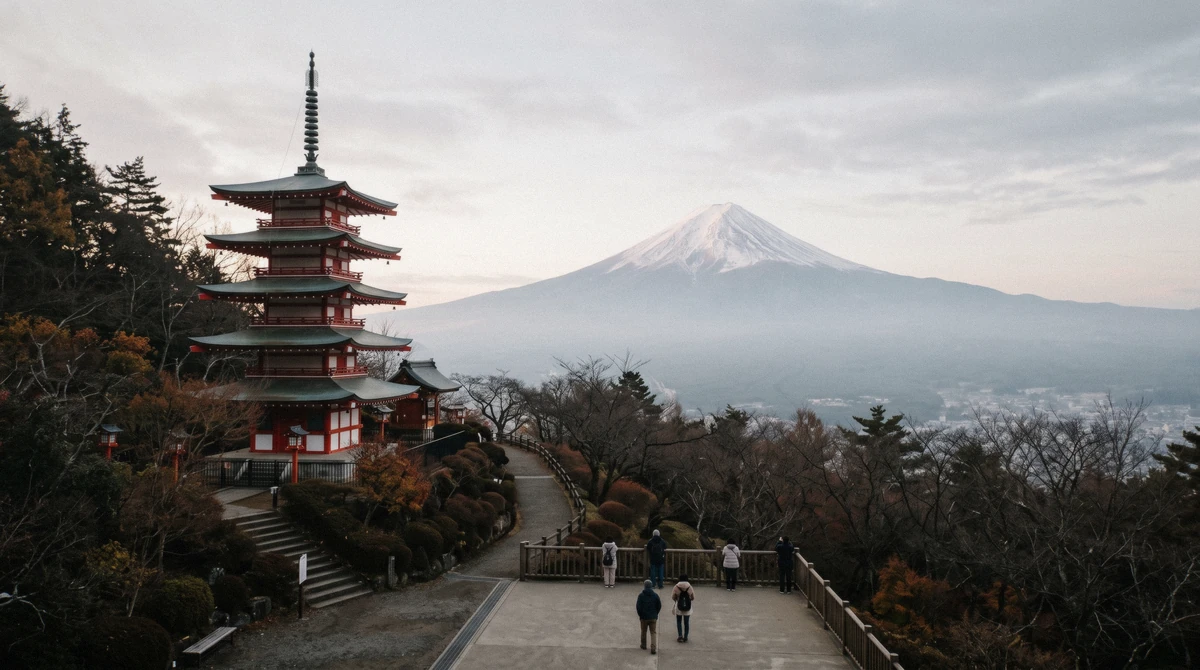
The pagoda is the reason the postcard exists. It is a five-storey peace memorial finished in 1963, set on the hillside above Fujiyoshida, and from the upper deck the tower, the town and the mountain line up in the frame everyone recognises. Your guide fills in the parts the photo never tells you: that the pagoda belongs to the Arakura Fuji Sengen Shrine below it, and that the whole hillside was planted with cherry trees to make the view what it is.
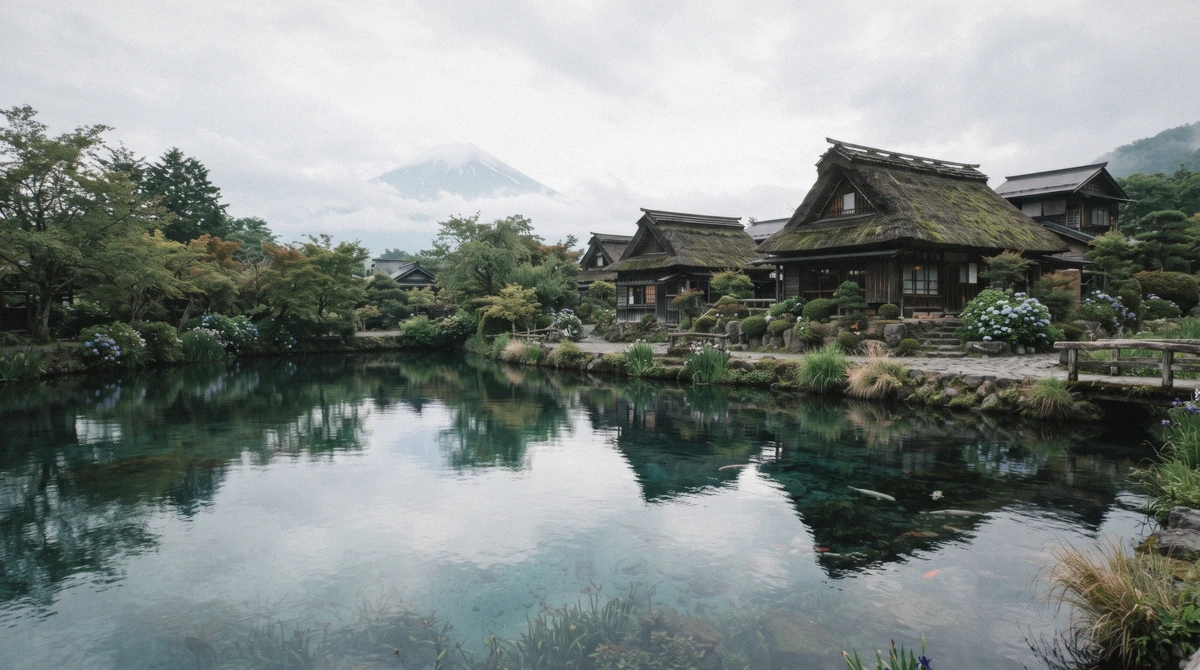
Oshino Hakkai is the softer half of the day. Eight ponds fed by snowmelt filtered through Mount Fuji's lava sit among thatched-roof houses, the water so clear you can count the fish. It has become popular enough to get busy by midday, which is exactly why a slower tour that arrives with time to spare beats a convoy that pulls in at the peak.
At $81 the day sits in the middle of the pack on price, but the trade you are making is fewer stops for more room to breathe at the ones that count.
What You'll See
A day arranged around two landmarks and the stories behind them:
- The Chureito Pagoda, a five-storey vermilion tower above Fujiyoshida
- The classic viewpoint where pagoda, town and Mount Fuji stack into one frame
- Arakura Fuji Sengen Shrine at the foot of the 398-step stairway
- Cherry trees in spring or maple colour in autumn blanketing the hillside
- Oshino Hakkai's eight spring ponds, fed by filtered Fuji snowmelt
- Thatched-roof farmhouses and clear-water channels around the village
- Wide Mount Fuji views from the lakes region on a clear morning
What's Included (and What Isn't)
What's Included
- Round-trip coach transport between Tokyo and the Fujiyoshida area
- A live guide providing local context at each stop
- Time at the Chureito Pagoda viewpoint and Arakura Fuji Sengen Shrine
- A visit to the Oshino Hakkai spring ponds and village
Not Included
- Lunch and drinks — bring cash or budget for a village meal
- Any personal shopping at Oshino Hakkai's stalls
- Hotel pickup — most departures meet at a set Tokyo point, so check the exact spot when you book
How the Day Unfolds
-
8:00
Depart central Tokyo
Meet at the set point near a major station and settle in for the ride west. The lakes region is roughly two hours out, so this is your window for a nap or the guide's briefing on the day.
-
10:00
Arakurayama Sengen Park & the pagoda
Arrive at the foot of the hill, pass the Arakura Fuji Sengen Shrine, and make the climb to the pagoda viewpoint. The guide explains what you are looking at while you line up the classic shot.
-
12:00
Lunch in the Fujiyoshida area
A break for food — often free time so you can pick a local spot. Fujiyoshida is known for its thick, chewy udon, worth seeking out.
-
13:30
Oshino Hakkai spring ponds
Walk the village of eight crystal-clear ponds fed by Fuji snowmelt, with thatched houses and mountain views between the water channels.
-
15:30
Final Fuji viewpoint
A last scenic stop for wide views of the mountain across the lakes region before the road home, weather permitting.
-
18:00
Return to Tokyo
Back in the city by early evening, exact time depending on traffic on the return leg.
Important Things to Know
The details that shape how the day actually goes:
- The famous viewpoint sits at the top of a 398-step stairway — the upper deck is not step-free, though a gentler sloping path also climbs the hill
- The pagoda itself is a separate structure from the viewing platform; the postcard angle is shot from the deck above it, not from beside the tower
- Mount Fuji is shy — it clouds over by midday more often than not, so a morning arrival is the whole point of this itinerary
- During the spring Cherry Blossom Festival the park's own car park closes to visitors, and peak weekends can bring crowd limits on the deck from as early as 5 a.m.
- Carry cash; village stalls, lunch spots and small shops around Fuji do not all take cards
What to pack
- Proper trainers or walking shoes — 398 steps up and back is real exercise, and heels or sandals are discouraged for safety
- A warm layer; the lakes region runs cooler than Tokyo year-round
- A charged camera or phone, since the best light on Fuji comes early
- A small day bag only — leave bulky luggage behind, as it is awkward on the stairway
Insider Tips for the Chureito Pagoda
Small moves that make a real difference at the viewpoint:
- Get up the steps early — on busy mornings photographers line up tripods from the 5 a.m. hour, and a coach tour arriving mid-morning means you want to head straight up before the deck fills.
- Cherry blossom peaks from late March into mid-April and autumn foliage in November; both are the most beautiful and the most crowded windows, so weigh the trade before you pick a date.
- If the 398 steps are daunting, take the longer sloping path instead — it climbs the same hill at a gentler grade and reaches the shrine grounds without the stairs.
- Morning light lands on the mountain from the front, so an early slot gives you a brighter, sharper Fuji than the flat afternoon haze.
- Remember the pagoda and the viewpoint are two different spots — walk up past the tower to the deck for the shot that lines up all three elements.
- Bring cash for the udon shops of Fujiyoshida and the stalls at Oshino Hakkai; it saves hunting for an ATM on a tight schedule.
Where You're Headed
Who Is This Tour Best For?
The travellers who get the most from a slower, culture-led day:
- Anyone chasing the definitive pagoda-and-Fuji photograph with time to get it right
- Visitors who want the story behind each stop, not just a car-park snapshot
- First-timers happy to trade a six-stop marathon for two well-paced landmarks
- Photographers who value an early, unhurried arrival at the viewpoint
- Travellers keen to pair a famous view with the quiet of Oshino Hakkai
Not ideal for
- Travellers with limited mobility — the classic deck is up a 398-step climb, and even the gentler path is a sustained uphill walk
- Anyone wanting to tick off as many sights as possible in one day; a six-spot tour covers more ground
- Visitors set on reaching Mount Fuji's 5th Station, which this itinerary does not include
Chureito Pagoda Tour — FAQ
How many steps is it to the Chureito Pagoda viewpoint?
There are 398 steps up the 'Sakuya-hime' stairway from the shrine to the pagoda area, a climb of about 15 to 20 minutes at a steady pace. A gentler sloping path also runs up the hill for anyone who would rather avoid the stairs, though it is still uphill the whole way.
Is the Chureito Pagoda the same as the viewpoint?
Not quite. The pagoda is a five-storey tower on the hillside, while the famous photo is taken from a viewing deck set above and behind it. You walk up past the pagoda to reach the platform where the tower, Fujiyoshida and Mount Fuji all line up in one frame.
What is the best time of year for this tour?
Cherry blossom from late March to mid-April and autumn foliage in November are the most spectacular, when the hillside frames the pagoda in colour. They are also the busiest. For the clearest view of the mountain with fewer crowds, late autumn through winter offers the driest air, and mornings always beat afternoons for a sharp Fuji.
Will I definitely see Mount Fuji?
No tour can promise it — Fuji clouds over on its own schedule and often hides by midday. This day trip is built around an early arrival at the viewpoint precisely to give you the best odds. Free cancellation on most departures means a poor forecast does not have to cost you.
What else does the tour visit besides the pagoda?
The main second stop is Oshino Hakkai, a village of eight spring-fed ponds of exceptionally clear water among thatched-roof houses. Most departures also include a lunch break in the Fujiyoshida area and a final scenic Fuji viewpoint before the drive back to Tokyo.
How long is the tour and where does it leave from?
It runs about 10 hours door to door, with roughly two hours of driving each way. Departures meet at a set point near a major Tokyo station rather than collecting you from your hotel, so check the exact meeting place and time on the booking page before the day.
What should you know before climbing to the pagoda?
It is 398 steps from the entrance of Arakurayama Sengen Park to the viewing deck, the park is free and open around the clock, and the pagoda is a war memorial rather than a temple. Our Chureito Pagoda visitor guide covers the climb, the access from Shimo-Yoshida Station and when the light is best.
What Travellers Say
The guide talked us through the shrine and the pagoda's history on the climb, which made the view mean more than just a photo. Fuji was out clear when we reached the top around ten — worth the early start.
We picked this over the six-stop tours and were glad we did. Real time at the pagoda and a proper wander around the Oshino Hakkai ponds, not a rushed twenty minutes each. Those 398 steps are no joke though.
A calm, well-paced day. The spring ponds were the surprise highlight for me, so clear you could see every fish, and the guide knew exactly where to stand for the best Fuji angle.